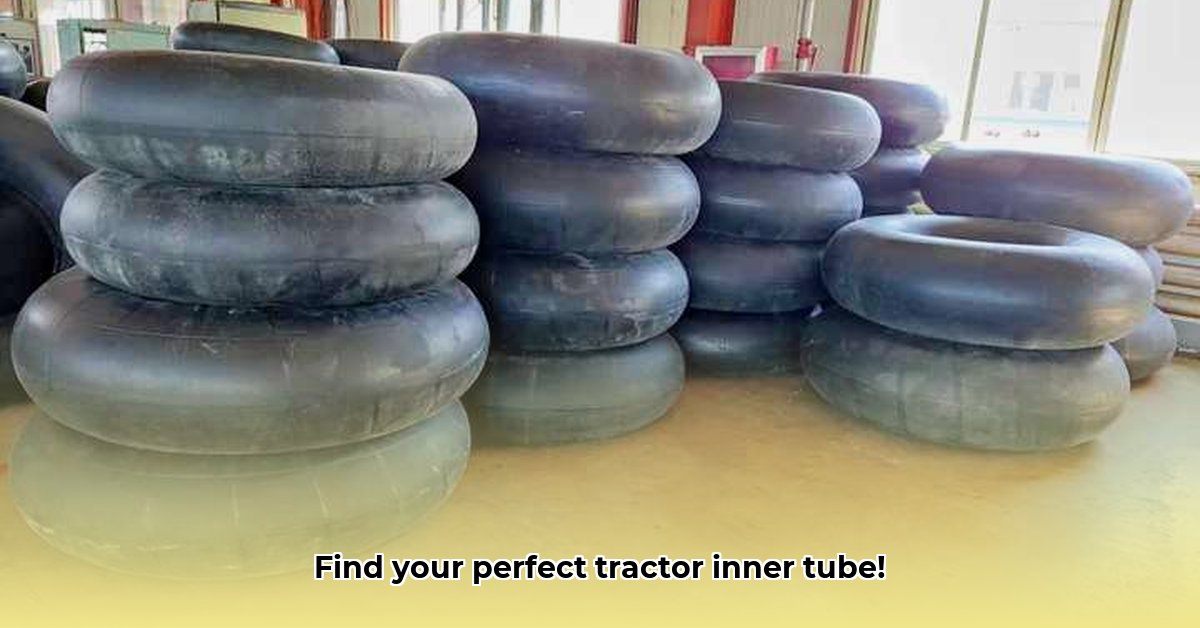
Inner Tube Tractor Tires: A Comprehensive Guide to Selection, Installation, and Maintenance
Finding the right inner tubes for your tractor tires is crucial for optimal performance, longevity, and cost-effectiveness. This guide provides a detailed overview of selecting, installing, and maintaining tractor inner tubes, helping you avoid costly repairs and downtime. We'll cover everything from choosing the right size and material to troubleshooting common problems and implementing cost-saving strategies. For more on tractor tire supplies, check out this helpful resource.
Sizing Up Your Tractor Tires: Precision is Paramount
Before purchasing inner tubes, accurately determine your tractor tire size. This information is printed on the tire's sidewall, typically in a format like "11.2-24" or "16.9-30," representing the tire's width and diameter. Using the incorrect size will lead to premature wear and potential damage. Double-checking this crucial detail is essential. Don't guess!
Rubber Choices: Butyl vs. Natural Rubber – A Durability Comparison
Tractor inner tubes are primarily made from butyl rubber or natural rubber. Butyl rubber offers superior air retention and puncture resistance, leading to extended lifespan and reduced maintenance. While natural rubber is often less expensive, its lower durability might necessitate more frequent replacements. The choice depends on prioritizing cost-effectiveness versus long-term durability. Which material best suits your needs and budget?
Installing Your New Inner Tube: A Step-by-Step Instructional Guide
Replacing a tractor inner tube requires careful attention to detail. This step-by-step guide ensures a smooth and efficient process:
- Complete Deflation: Remove the valve core to fully deflate the tire. (This prevents accidental injury and makes the process safer.)
- Careful Tire Removal: Employ tire irons to gently pry the tire bead from the rim. (Working with a partner is recommended for easier handling.)
- Thorough Inspection: Examine the old inner tube for any damage, such as punctures or excessive wear. This helps assess the need for a new tube or tire replacement. (Replacements should always be done using top-quality parts.)
- Inner Tube Installation: Carefully position the new inner tube inside the tire, ensuring even distribution to avoid pinching.
- Tire Remounting: Carefully seat the tire back onto the rim, ensuring the bead is properly seated all the way around. Use a tire mounting lubricant to assist with the process. (Improper mounting can damage the tube and compromise the tire.)
- Inflation and Leak Check: Inflate the tire to the manufacturer's recommended pressure (found in your tractor's manual) and check for leaks using soapy water. (Identifying leaks early prevents potential breakdowns.)
Troubleshooting Common Inner Tube Problems: Prevention and Solutions
Even with careful installation, problems can occur. Here's how to address common issues:
- Persistent Leaks: Thoroughly inspect the tube and valve stem for punctures or damage. Small punctures might be repairable with a patch kit, but significant damage often requires replacement.
- Premature Wear: Underinflation is a major contributor. Maintain proper inflation pressure as specified in your tractor's manual to extend tube lifespan. (Correct inflation pressure is key to tire and tube longevity.)
- Unexpected Punctures: Regular tire and tube inspections can help identify minor damage before significant leaks develop.
Saving Money on Inner Tubes: Practical Cost-Saving Tips
Several strategies can minimize expenses associated with inner tubes:
- Bulk Purchasing: Buying inner tubes in bulk from reputable suppliers often provides cost savings.
- Preventative Maintenance: Regular inspections and promptly addressing minor issues prevent escalating damage and costly replacements. (This proactive approach is much cheaper than reactive repair.)
- Reliable Suppliers: Identifying reliable suppliers offering quality products at competitive prices is crucial for long-term cost savings.
Top Inner Tube Brands: A Quick Overview (Note: Brand-specific recommendations vary by region and availability. Consult online reviews for local insights.)
The best brand for you will depend on region and availability. Research online reviews for brands well-regarded in your area.
Inner Tube Size Comparison Chart
| Tire Size | Inner Tube Size | Suitable Tractor Size |
|---|---|---|
| 11.2-24 | 11.2-24 | Small to Medium Tractors |
| 16.9-30 | 16.9-30 | Medium to Large Tractors |
| 18.4-34 | 18.4-34 | Large Tractors |
| 23.1-30 | 23.1-30 | Very Large Tractors |
(Note: These are approximate sizes; always verify with your tractor's manual or tire markings.)
Choosing the Best Tractor Inner Tube for Longevity: A Deeper Dive
"The lifespan of your tractor's inner tubes directly impacts operational efficiency and overall costs," says Dr. Emily Carter, Agricultural Engineering Professor at Purdue University. "Investing in the right tube, and maintaining it properly, is an investment in minimizing downtime."
Key Takeaways:
- Choosing the correct inner tube size is paramount to prevent premature wear.
- Butyl rubber offers superior durability compared to natural rubber.
- Regular maintenance and prompt repairs significantly extend inner tube lifespan.
Understanding Your Needs: Matching Tubes to Tractor and Terrain
Before selection, consider your tractor's size, the type of work it performs, and the typical terrain. Heavier tractors working in rocky conditions require more durable inner tubes than lighter tractors operating in smooth fields. It's about choosing the right tool for the job.
Selecting the Right Inner Tube: Size and Material Considerations
Precise size matching is critical. Always cross-reference your tire's specifications with the inner tube's dimensions. Mismatched sizes lead to pinching and failure. The material choice between butyl and natural rubber hinges on balancing durability and cost. Butyl rubber, while slightly more expensive, offers superior air retention and longer life, leading to significant long-term savings. Has your experience shown a preference for a particular material?
Installation and Maintenance: Proactive Measures for Extended Lifespan
Proper installation is vital. Follow the step-by-step guide above meticulously. Regular maintenance involves monthly inspections for damage, checking inflation pressure, and promptly repairing minor punctures. These measures prevent issues from escalating and drastically extend the life of your inner tubes.
Troubleshooting Common Issues: Quick Solutions to Save Time and Money
Addressing problems proactively is cost-effective. Use repair kits for small punctures; leaks often signal valve stem problems; and premature wear is frequently due to underinflation. Early problem detection extends the life of the tube.
Cost-Saving Strategies: Informed Purchasing and Maintenance
Buying in bulk reduces per-unit costs. Preventative maintenance – regular inspections and timely repairs – avoids costly replacements and downtime. Strategic choices save significantly in both the short and long term.
References: